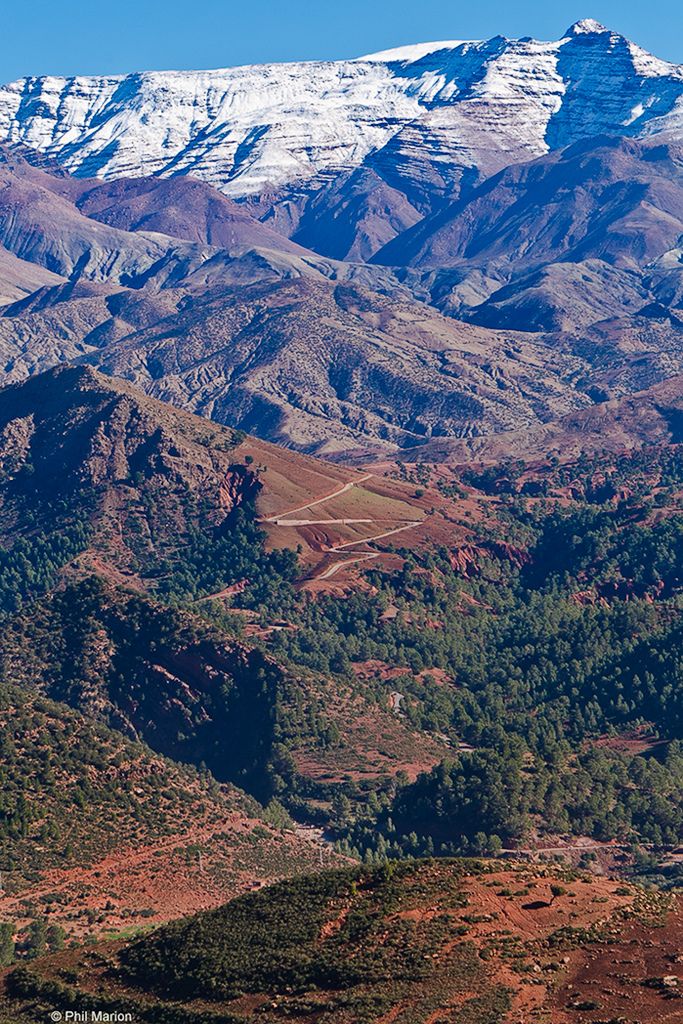
When picturing Morocco, the mind naturally drifts towards rolling Saharan dunes or the chaotic, spice-scented alleys of ancient imperial cities. However, running like a jagged spine across the center of the country is one of Africa's most spectacular and demanding natural wonders: the High Atlas Mountains. For those willing to trade their comfortable Riad slippers for a sturdy pair of hiking boots, trekking through this majestic range offers an adventure that is as physically rewarding as it is culturally profound.
The crown jewel of the High Atlas is undeniably Mount Toubkal. Standing at a staggering 4,167 meters (13,671 feet), it holds the prestigious title of being the highest peak in North Africa. Summiting Toubkal is a non-technical climb, meaning you do not need ropes or advanced mountaineering experience, but it does require excellent physical fitness, pure determination, and a deep respect for altitude.
The Atlas Mountains don't just challenge your physical endurance; the staggering beauty of the jagged peaks and the overwhelming warmth of the Berber people completely capture your soul. — Alice Morrison (Adventurer and Author of 'Adventures in Morocco')
Imlil: The Chamonix of Morocco
Almost all Toubkal expeditions begin in the picturesque village of Imlil, located just a 90-minute drive south of Marrakech. Often referred to as the 'Chamonix of Morocco,' Imlil is a bustling basecamp completely dedicated to mountain tourism. The air here is noticeably thinner, crisper, and carries the scent of walnut trees and wood smoke. It is here that you will meet your local guide and organize mules to carry your heavy packs up the steep mountain trails.
Hiring a local guide is no longer just highly recommended; it is officially required by the Moroccan government for all treks ascending Mount Toubkal. This regulation ensures your safety in unpredictable alpine weather conditions, but more importantly, it directly injects vital income into the local mountain communities who rely on eco-tourism for their livelihood.
The Ascent: Refuges and Alpine Starts
A standard Toubkal trek takes two to three days. The first day involves a steady, six-hour hike up through rocky valleys and past ancient shrines to reach the basecamp refuges (Refuge Toubkal or Les Mouflons) situated at 3,207 meters. The evening at the refuge is an experience in itself: dozens of trekkers from around the world huddle together in the communal dining hall, sharing a massive, carb-heavy vegetable tagine and swapping stories by the fireplace.
The True Highlight: Amazigh Mountain Hospitality
While reaching the summit is the primary goal, anyone who has trekked the High Atlas will tell you that the true magic lies in the encounters with the indigenous Amazigh (Berber) people. These resilient communities have lived in these harsh, remote valleys for millennia. Passing through their terraced villages, built seemingly into the vertical cliffs, gives you a profound glimpse into a lifestyle perfectly adapted to nature.
The hospitality you receive in these mountains is unparalleled. Whether it is a shepherd offering you a glass of piping hot, painfully sweet mint tea from a blackened kettle, or your guide singing traditional mountain songs to keep morale high during the toughest parts of the climb, the human connection is what makes the High Atlas truly unforgettable.